University Of Cambridge Professor Jason Arday Dead At 41
Jason Arday: Cambridge Professor Dead At 41 Amid Plagiarism Allegations From ‘Race Realist’ Academic Accused Of Endorsing Eugenicist Logic

Jason Arday, the former University of Cambridge professor (whose historic appointment as the institution’s youngest professor) was followed by a media firestorm over allegations of plagiarism. Arday has died at 41, just days after resigning from his post. Now, scrutiny is turning on the motives of accuser Nathan Cofnas, whose work claims that Black people are inherently less intelligent and only qualified for success in “sports and entertainment.”
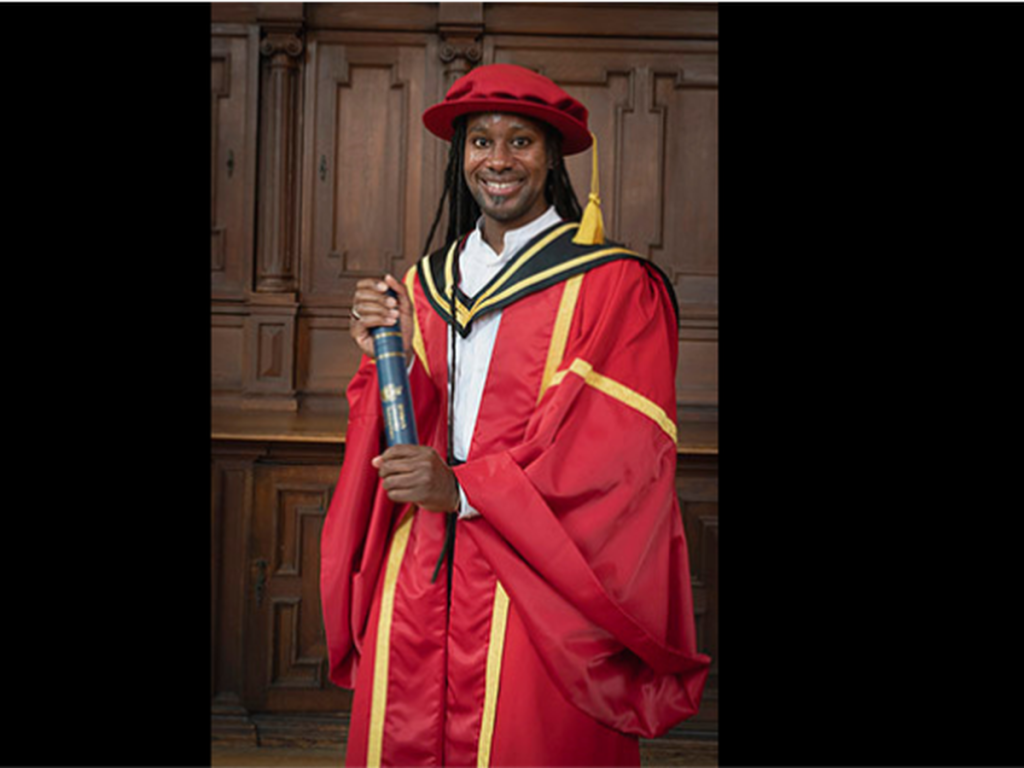
Arday’s death follows weeks of public debate over his academic record and personal story, scrutiny that he said had gone “far beyond scholarly disagreement.”
His family has since said a “campaign of misinformation” became too much for the scholar, while questions are mounting about the circumstances surrounding the controversy. Several critics and mourning colleagues have challenged the validity of the accuation from self-described “race realist” academic who helped ignite it
Jason Arday Found Dead After Resigning From Cambridge
BBC states emergency services responded Friday to an address in Battersea, south London, where a man was found unresponsive. The Metropolitan Police said the death was being treated as “unexpected” but was not believed to be suspicious.
Arday’s family said they were “in shock to have lost this amazing father, partner, brother, uncle and son,” adding that the recent controversy had taken a devastating toll.
“The campaign of misinformation was too much for Jason, who was a gentle man and who always wanted to see the best in everyone,” his family said.
Arday had resigned as Cambridge’s professor of sociology of education the previous week amid plagiarism allegations and questions surrounding some of his reported achievements. According to the BBC, Arday denied plagiarism but acknowledged errors in his work.
Before his death, Arday pushed back against the intensity of the response, telling The Times that the situation had extended beyond an academic dispute.
“We’re talking about academia here. I didn’t murder somebody,” he said. “I think the cruelty that I’ve experienced and the positioning of me as this kind of liar and fantasist is totally unacceptable.”
When announcing his resignation, Arday similarly said the “personal cost” had become “too great.”
“While criticism is an inevitable part of academic life, what I have experienced has gone far beyond scholarly disagreement,” Arday said. “The relentless accusations, speculation and public commentary have taken a profound toll on me and on those I love.”
Arday also stressed that his resignation should not “be mistaken for an acceptance of the narratives that have surrounded me.”
Liverpool John Moores University, which awarded Arday his doctorate in 2015, had previously investigated allegations concerning his work and concluded that he had not plagiarized.
Cambridge nevertheless announced an independent investigation into Arday’s appointment shortly before his death.
Arday’s friend, professor of Black Studies Kehinde Andrews, said the academic was “very down” following his resignation.
“He was very upset. He felt that there was no way out. He effectively wasn’t leaving the house. He had lost a lot of weight,” Andrews told BBC Newsnight.
“There should be a wakeup call to just how bad black academics actually have it in academia,” he added.
Details of Arday’s Historic Rise And Final Days
In the New York Times, Arday grew up in a working-class area of South London as the son of Ghanaian immigrants. He wrote in his memoir that he could not speak until age 11 and could not read until age 18.
Arday eventually earned a doctorate and built an academic career that included writing and lecturing about racism in higher education. In 2023, Cambridge hired him at 37 for an established chair of education at Jesus College, making him the youngest Black professor in the university’s history.
The Times reports that the public firestorm surrounding Arday intensified in July after a blog post accused him of plagiarism in his dissertation and embellishing elements of his personal story. The newspaper noted that the allegations were made by a scholar known for work asserting that Black people were genetically predisposed to be less intelligent than white people.
Scrutiny intensified ahead of the publication of Arday’s memoir as journalists identified additional alleged inconsistencies in his story. Many critics claimed the media sensationalized the story due to Arday’s race compared to other professors’ quiet plagiarism allegations.
According to the Times, academic integrity outlet Retraction Watch reported that allegations surrounding Arday’s work had circulated within Cambridge for years and that the institution had disregarded repeated warnings about possible duplication.
Cambridge initially defended Arday before announcing an independent investigation into his hiring. In a letter to faculty, the university called the case “an aberration” and “troubling.”
Some faculty members continued to support Arday, while others signed an open letter questioning Cambridge’s handling of the allegations and accusing the institution of “crafting a media narrative focusing on his youth, his race, and his transformative potential.”
Following Arday’s death, Cambridge Vice-Chancellor Deborah Prentice said the university was “desperately saddened” by the news.
“Our heartfelt sympathies go to Jason Arday’s family and friends at this incredibly difficult time,” Prentice said.
Read more about Jason Arday’s plagiarism accuser and his anti-DEI crusade after the jump.
Jason Arday: Cambridge Professor Dead At 41 Amid Plagiarism Allegations From ‘Race Realist’ Academic Accused Of Endorsing Eugenicist Logic was originally published on bossip.com


